In 2025, technology in mental health has made huge strides. I remember a friend feeling overwhelmed. She needed help fast. Now, AI in therapy and digital tools offer hope.
Apple’s iOS 17 with mental health tracking shows our progress. It’s not just apps; they’re real helpers for our emotional health. This change is changing how we view mental health, helping communities and workplaces support us better.
Key Takeaways
- The global mental health apps industry is projected to grow significantly, reaching approximately $17.5 billion by 2030.
- There is an increasing acceptance of mental health discussions, driving demand for more accessible treatment solutions.
- Major tech firms are integrating mental health tracking features into their platforms, normalizing mental health care.
- AI in therapy is becoming a more prominent tool, enriching our approach to psychological support.
- Digital tools are not just for personal use; they are transforming workplaces and communities to be more supportive.
Emerging Trends in Technology in Mental Health
The world of mental health is changing fast, thanks to new tech. Wellness tech, like AI in therapy and mobile apps, makes help more accessible and effective. These tools are changing how we support our mental health.
AI and Machine Learning Enhancements
AI and machine learning are making therapy better. They help create treatment plans that fit each person’s needs. This leads to better results for patients.
Chatbots are also helping a lot. They offer support anytime and teach coping skills. I’ve seen how they help with anxiety and depression.
Virtual and Augmented Reality in Therapy
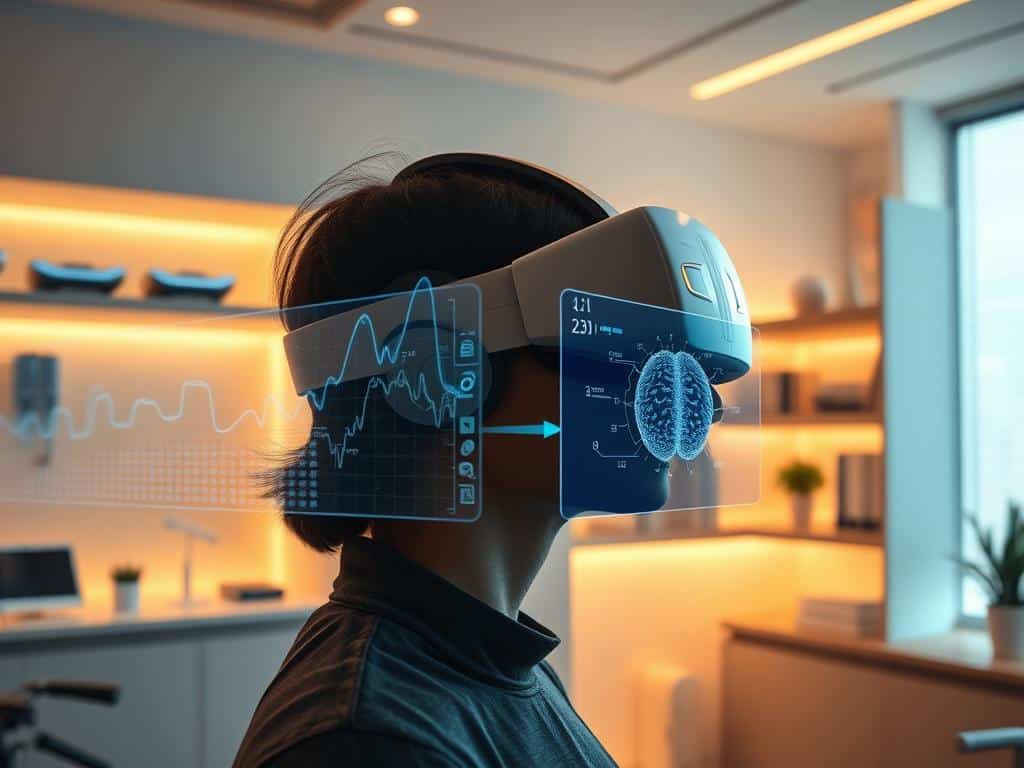
VR and AR are changing therapy too. They create safe spaces for facing fears. For example, VR lets people practice facing their anxieties in a controlled way.
This approach offers new insights that traditional therapy might miss. It makes therapy more effective.
Growth of Mobile Mental Health Applications
Mobile apps for mental health are growing fast. They’re expected to reach $269.31 billion by 2032. These apps make it easy to find help and connect with others.
They help with daily mental wellness and encourage self-care. In my view, these apps show the future of mental health tech. They offer care that fits into our busy lives.

How Digital Tools are Transforming Mental Health Care
Digital tools are changing mental health care in big ways. They make it easier to get help and let people take control of their mental health. Tools like interactive apps make therapy fun and easy to get to.
Interactive and Gamified Applications
Apps like Happify use games to help improve mental health. They make it fun to work on emotional health. This mix of fun and science helps people stay on track.
Wearables in Mental Health Management
Wearables are key in tracking mental health in real time. They’re expected to grow a lot, reaching $186 billion by 2030. Devices like Oura rings give insights into how we feel and help manage stress.
Conclusion
Technology is changing mental health care in big ways. I’ve seen how AI and virtual therapy are becoming key parts of our care. Digital tools like apps and wearables let people manage their mental health on their own.
These tools make care more personal and easy to get. They meet the unique needs of each person. This is a big step forward.
There’s also a growing focus on mental health. Talking about emotional health is becoming more common. This change helps us see mental health as important.
It’s making our society more open to mental health issues. This openness helps people find the help they need. It’s a positive change.
We’re on the edge of a new era in mental health care. This era focuses on care that fits each person’s needs. It helps us understand and manage our emotions better.
The future of technology in mental health looks bright. It will change many lives for the better. We’re excited to see what’s next.
