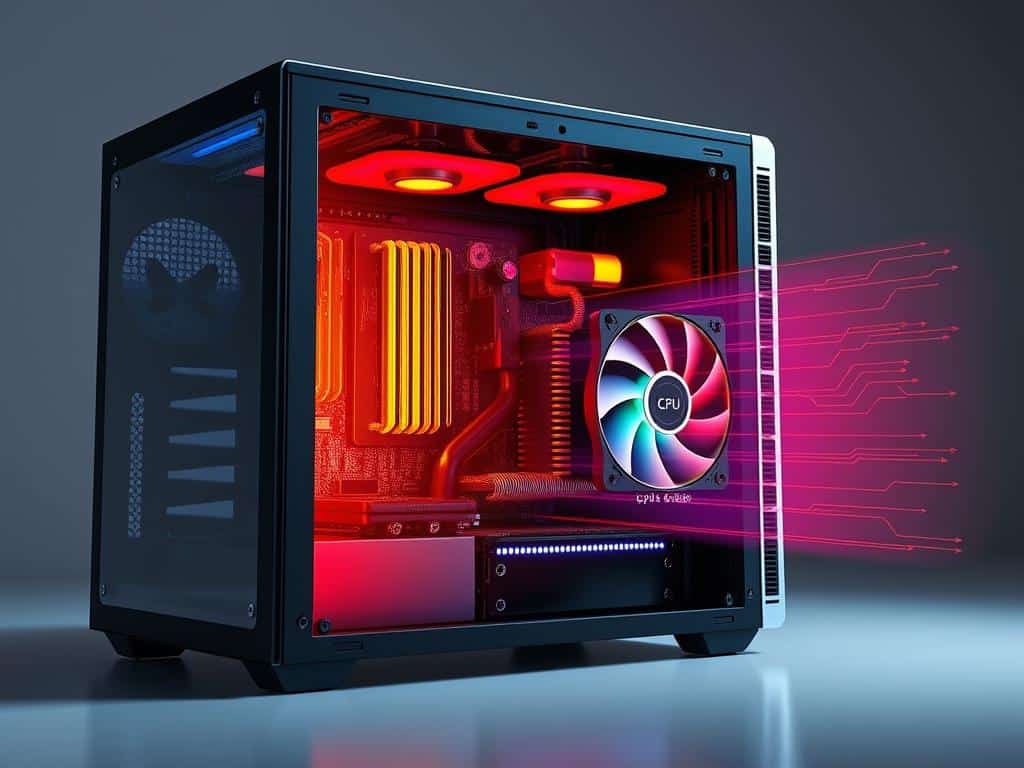
I remember when my gaming PC started lagging. It was after a great gaming session that I noticed the frame rates dropping. This made my experience frustrating.
Opening the case, I was hit with a lot of heat. It felt like it was suffocating me. This moment made me understand how vital thermal management is for my PC’s performance and life.
As technology gets better, knowing about thermal management systems is key. Heat from processing power can harm performance and reliability. I found out that good PC cooling solutions keep my system running well. This improved my experience and kept my hardware safe.
This knowledge started a journey to optimize my PC. It made me see the importance of balancing heat and performance.
Key Takeaways
- Effective thermal management is key for PC performance and longevity.
- Heat impacts not just performance but also component reliability.
- Knowing about thermal management systems boosts user experience.
- The right cooling solutions prevent overheating and system failures.
- Understanding thermal dynamics improves system efficiency.
Understanding Thermal Management in PCs
When I think about my PC’s performance, thermal management is key. It involves controlling the temperature inside the device for better efficiency. Knowing how to manage heat is essential for keeping electronic parts safe.
What Is Thermal Management?
Thermal management is about controlling heat in electronic systems. My PC gets hot when it’s on, and without good management, it can get too hot. Understanding this helps keep my device safe and running well.
The Components of a Thermal Management System
Several parts work together to keep my PC cool. Heat sinks absorb and spread out heat. Fans help air move, and special materials improve heat transfer. Liquid cooling systems also help cool things down.
How Heat Affects Performance
Heat can really slow down my PC. Too much heat can make it run slower and even crash. It can also damage important parts over time. Knowing this helps me keep my PC in top shape.
The Importance of Thermal Management
Thermal management is key for any computing system’s performance and reliability. It keeps the CPU safe and boosts system reliability. Keeping processors cool prevents overheating, which can lead to failures and lower performance.
Ensuring CPU Safety and Reliability
Keeping the CPU at the right temperature is vital. It not only protects the CPU but also makes the system more reliable. When thermal management works well, it cuts down on thermal throttling. This means the system runs smoothly and lasts longer without sudden shutdowns.
Maximizing Performance and Longevity
Good thermal management directly boosts performance. It lets my system run at its best without any hiccups. Plus, a cool system lasts longer, saving money on replacements and downtime. The right cooling solutions help my devices perform better and last longer.
Common Thermal Management Techniques in PCs
Keeping PCs cool is key for their performance. Each method helps get rid of heat from parts, keeping them safe and lasting longer. I’ll talk about heat sinks, active vs passive cooling, and liquid cooling systems.
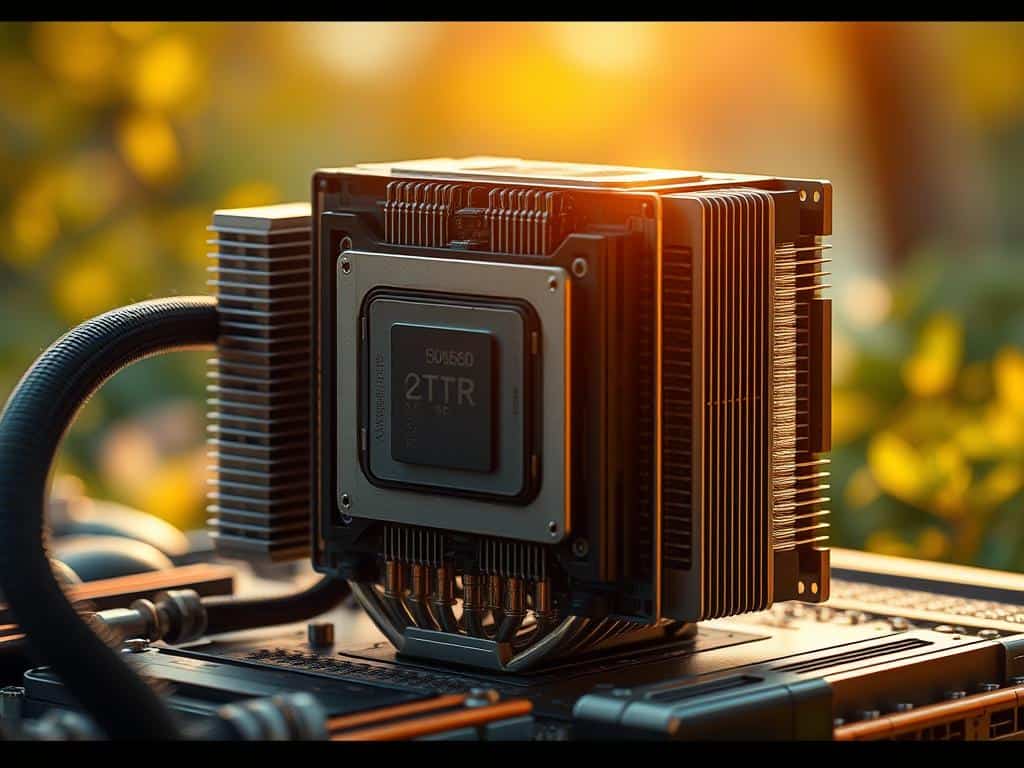
Heat Sinks: The Essential Cooling Component
Heat sinks are critical for cooling. They spread out heat, helping it move away from important parts like CPUs and GPUs. This keeps temperatures down, stopping overheating during tough tasks.
Active vs Passive Cooling Solutions
Choosing between active and passive cooling is important. Active cooling uses fans or pumps to move air or liquid, boosting heat removal. Passive cooling, on the other hand, uses natural flow without moving parts. Active cooling is better but passive is quieter and uses less power.
Liquid Cooling Systems
Liquid cooling is a top-notch way to manage heat. It uses liquid to take heat from parts and move it away. It’s great for high-performance needs, improving performance and reducing noise. It’s a favorite for gamers and tech fans.
Conclusion
Thermal management is key to keeping PCs running well. It helps maintain their performance and lifespan. By using heat sinks, cooling systems, or liquid cooling, I can make my computer work better.
It’s important to focus on cooling to protect my investment. This way, I can enjoy a better computing experience. Knowing how to manage heat is vital for anyone who wants their PC to last long and perform well.
