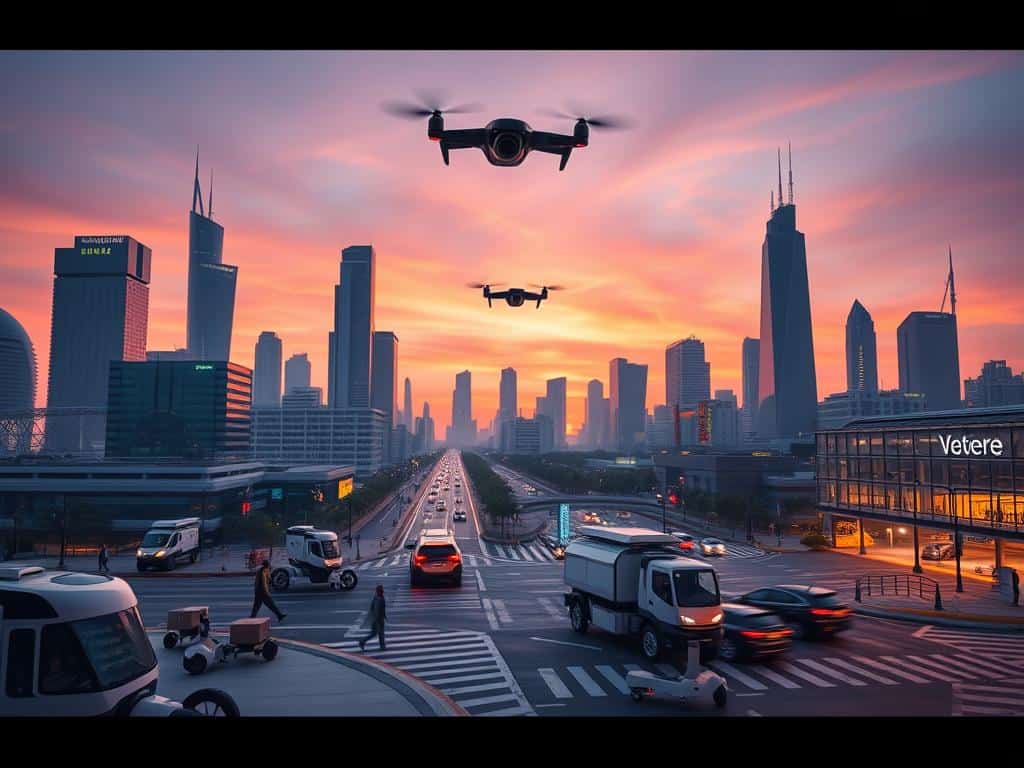
As I walk through a busy city, I dream of a future with autonomous delivery systems. Imagine your online order arriving by a sleek, driverless vehicle. This could be our reality soon, thanks to companies like Amazon and Google.
They are working on self-driving technology to change how we get our goods. But will we see these changes quickly by 2025, or will they come slowly? Only time will tell as we watch these innovations grow.
Key Takeaways
- Autonomous delivery systems are poised to revolutionize logistics by 2025.
- Major players like Amazon and Google are leading the way with self-driving technology.
- Consumer behavior is likely to change dramatically with driverless vehicles.
- Innovation in delivery will enhance efficiency and convenience.
- The adoption rate for autonomous systems may vary by region and sector.
Innovations in Autonomous Delivery Systems
In recent years, the world of autonomous delivery systems has changed a lot. Drones have become key in changing how companies deliver goods. They offer new ways to meet customer needs, thanks to technology.
The Rise of Drones in Delivery
Drones are making delivery faster and more reliable. Companies like Amazon are leading the way with drone technology. They aim to make delivery cheaper and quicker.
Delivery Robots: The Future of Urban Logistics
Delivery robots, like those from Starship Technologies, are changing urban delivery. They can go through crowded areas to deliver right to your door. This is a big step forward in making delivery easier for everyone.
Tech Innovations Enhancing Delivery Efficiency
New tech is making delivery better. AI helps plan routes based on traffic. Also, better sensors and driver-assistance systems make delivery smoother. This all helps the logistics network work better together.
Challenges Facing Autonomous Delivery Systems
Exploring autonomous delivery systems, I see many challenges. In the U.S., regulatory hurdles are big obstacles. Laws and regulations vary, slowing down the use of autonomous vehicles. Debates on who’s liable in accidents add to the complexity, mixing rules with ethics.
Regulatory Hurdles and Safety Concerns
Regulatory debates are ongoing. States have different safety rules for self-driving tech, making it hard to start these systems. Safety worries make people doubt these technologies, affecting how they see them.
Public opinion is influenced by fears about these systems’ reliability. This shapes views on their readiness for everyday use.
Public Acceptance and Trust Issues
Getting people to accept autonomous delivery is key. They need to trust these systems first. Surveys show people are cautious, fearing accidents.
This fear highlights the need for companies to be open and educate the public. Building trust is essential for wider acceptance of these solutions.
Conclusion
Looking at the progress in autonomous delivery systems, we’re on the edge of a big change in logistics. The use of drones and delivery robots is changing how we work and how we shop. By 2025, these systems will make things more efficient and cheaper, following the latest market trends.
But, we also face challenges and opportunities. We need to deal with rules and getting people to trust these new systems. Companies are working hard to solve these problems, showing us a better future for delivery.
In summary, the move to fully autonomous delivery is a journey, but the gains are worth it. As tech gets better and people become more open, we’ll see smarter ways to deliver goods in cities.
