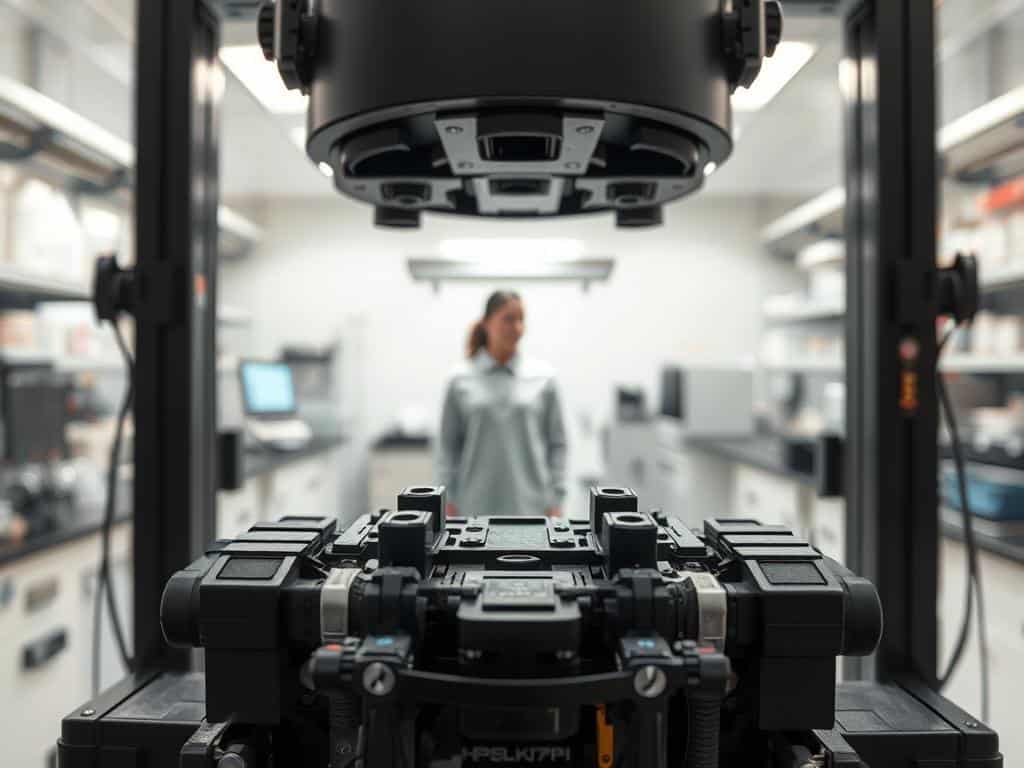
When I first used a 3D scanner, it felt like opening a door to the future. It amazed me how it could turn real objects into digital data with amazing accuracy. It was incredible for capturing the details of a vintage car or designing jewelry.
What really caught my attention was how many industries were using it. From cars to healthcare, it was changing how they designed and made products. In today’s world, 3D scanning is set to change design and manufacturing in big ways.
We’ll dive into the basics of 3D scanning, its accuracy, and its wide range of uses. It’s changing how we design and make things.
Key Takeaways
- 3D scanning technology revolutionizes design and manufacturing.
- It accurately captures detailed geometries of objects.
- Applications range from healthcare to automotive industries.
- Understanding resolution and accuracy is critical for effective use.
- The technology supports efficient replication and product development strategies.
- Future applications promise further innovations across various fields.
The Basics of 3D Scanning Technology
3D scanning technology has changed how we capture and analyze objects. It uses non-destructive methods to capture detailed information of various items. This allows for digital analysis and precision in many fields.
What is 3D Scanning Technology?
At its core, 3D scanning technology captures the geometry of real-world objects. It uses laser beams or photogrammetry to record the shape and appearance of items. This creates a digital version in high resolution.
This is very useful in engineering, art, and manufacturing. Accurate digital models are key in these fields.
How Does 3D Scanning Work?
3D scanning projects a laser or captures images from different angles. The scanner collects data points that define the object’s surface. This creates a detailed 3D model.
This model can be refined and edited through software. This improves its accuracy and usability for various applications. Knowing how scanning works helps us understand its capabilities and limits.
Difference Between Resolution and Accuracy in Scanning
Resolution and accuracy are key in 3D scanning technology. Resolution is about the detail level of the scanned model. High-resolution scans show fine details, while lower resolutions might miss them.
Accuracy shows how well the scanned model matches the real object. It’s important to balance both resolution and accuracy for effective digital analysis. This affects the quality of the scanned output.
Applications and Innovations of 3D Scanning Technology
Exploring 3D scanning reveals its wide range of uses. It impacts both industries and everyday life. Different scanners meet various needs, from detailed designs to simple uses.
Types of 3D Scanners
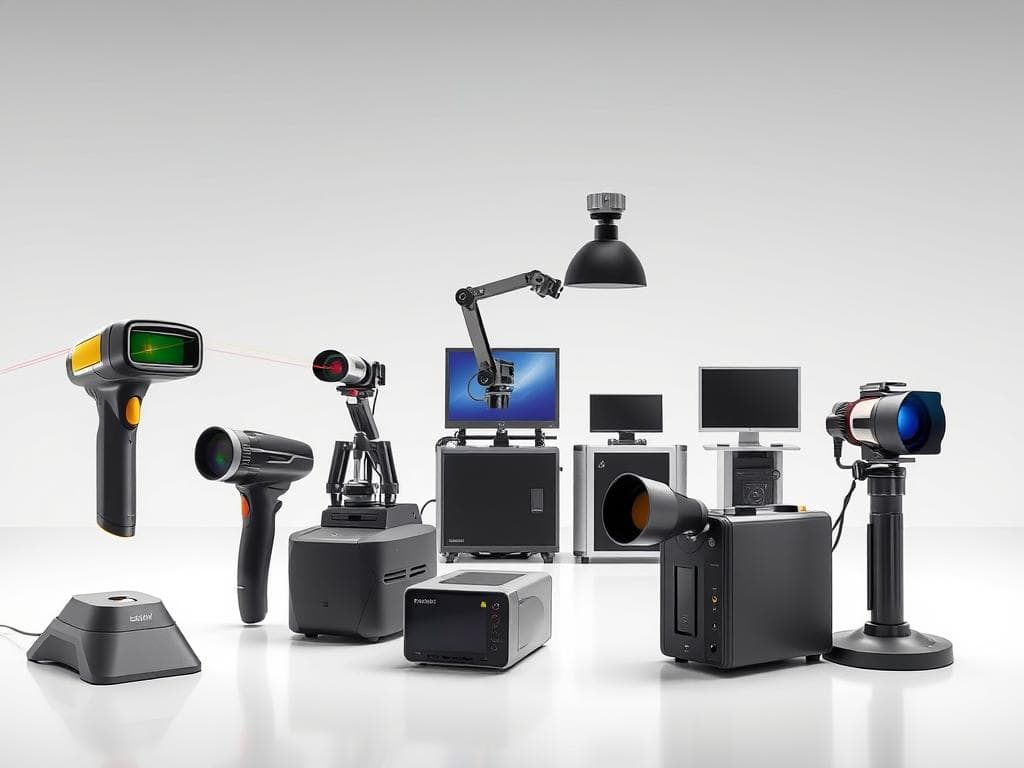
Laser and structured light scanners are key for their accuracy. Laser scanners use lasers to create precise models. Structured light scanners capture object details with patterns.
Photogrammetry is a new tech that uses many images to make 3D models. It’s a great addition to scanning.
3D Scanning in Adaptive Machining
Adaptive machining gets a big boost from 3D scanning. It lets makers adjust their work based on real-time data. This leads to better accuracy and efficiency.
It also cuts down on waste and saves materials. This makes manufacturing cheaper and more eco-friendly.
Reverse Engineering and Product Design
Reverse engineering uses 3D scanning in creative ways. It helps designers make better versions or new products. This makes design faster and more creative.
It also lets designers learn from competitors. This can lead to new ideas and improvements.
Industrial and Consumer Applications
3D scanning goes beyond work to everyday life. It’s used for custom items and detailed prototypes. It’s also key in gaming and virtual reality.
It makes games and virtual worlds more real. This technology is shaping the future of many industries.
Conclusion
3D scanning technology is a big step forward in design and engineering. It collects and analyzes data with great precision. This helps make production smoother and products more accurate.
This technology is more than a trend; it’s a game-changer. It’s changing many fields, from making things to consumer goods. It’s making a big impact.
The future of 3D scanning looks bright. I think it will be used even more in healthcare, building, and saving art. It will change how we make and see things.
It will also let us create things we can’t imagine yet. This is exciting for designers and inventors.
Looking back, 3D scanning is key to future progress. By using these technologies, industries can get better at making things. This will lead to a more advanced and connected world.
