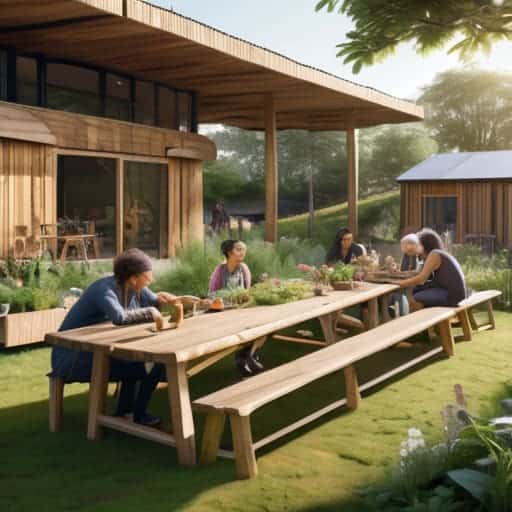
I’m so tired of hearing academics and “thought leaders” treat Post-growth Social Models like some complex, high-level math equation that only people with PhDs can solve. They wrap these ideas in layers of impenetrable jargon, making it sound like we need a massive, expensive bureaucratic overhaul just to breathe. It’s total nonsense. The truth is, we don’t need more complicated spreadsheets or shiny new economic theories; we just need to stop pretending that infinite expansion is a sane way to run a finite planet.
I’m not here to sell you on some utopian fantasy or lecture you from an ivory tower. Instead, I want to pull back the curtain and talk about what this actually looks like on the ground—the messy, practical, and sometimes difficult work of building communities that prioritize human well-being over a rising GDP. Over the next few sections, I’m going to share the real-world frameworks that actually work, stripped of the hype and the academic fluff, so you can see how we might actually navigate this transition together.
Table of Contents
- Moving Beyond Gdp to a True Wellbeing Economy Framework
- Degrowth Economic Theory Breaking the Addiction to Expansion
- Five Ways We Actually Build a Life Beyond the Growth Trap
- The Bottom Line: What We’re Actually Aiming For
- The Growth Trap
- The Path Forward Isn’t a Retreat, It’s a Reclaiming
- Frequently Asked Questions
Moving Beyond Gdp to a True Wellbeing Economy Framework
For decades, we’ve been measuring the health of our civilization with a single, broken yardstick: GDP. It’s a metric that counts the money spent cleaning up an oil spill as a “gain” but ignores the value of a clean river or a well-rested community. If we want to actually thrive, we have to pivot toward a wellbeing economy framework that prioritizes human flourishing over mere transaction volume. This isn’t about being “anti-money”; it’s about recognizing that a rising stock market means absolutely nothing if our mental health is cratering and our ecosystems are collapsing.
Transitioning to this model requires more than just a few new spreadsheets; it requires a fundamental shift in how we define progress. Instead of chasing the phantom goal of infinite expansion, we should be leaning into regenerative economic systems that replenish what they use. This means designing local economies that focus on durability and care rather than planned obsolescence. When we stop equating “more” with “better,” we finally clear the space to build a society that is actually stable enough to last.
Degrowth Economic Theory Breaking the Addiction to Expansion
Let’s be honest: we’ve been conditioned to treat a rising GDP line like a pulse monitor for a healthy civilization. But when that line goes up, it doesn’t guarantee that people are happier or that the planet is breathing easier. This is where degrowth economic theory comes in, and no, it isn’t a call to return to the Stone Age. It’s a radical argument that we need to intentionally scale down production and consumption in wealthy nations to bring our footprint back within planetary boundaries.
Of course, shifting toward a post-growth mindset isn’t just about macroeconomics or policy tweaks; it’s deeply personal and requires us to rethink how we connect with others on a fundamental level. As we deconstruct these rigid, productivity-obsessed structures, we often find that our social connections and intimacy become the real bedrock of a meaningful life. If you’re looking to explore more about navigating human connection and bodily autonomy outside of traditional societal pressures, checking out casual sex edinburgh can be a surprisingly useful way to reclaim agency over your own experiences and desires.
The real friction lies in our current addiction to expansion. We’ve spent decades trying to achieve decoupling growth from environmental impact, essentially hoping we can keep the engine running while somehow cutting the emissions. But the math just isn’t adding up. Instead of chasing infinite expansion on a finite planet, we should be pivoting toward regenerative economic systems that prioritize stability over speed. It’s about shifting the goalpost from “more” to “enough,” ensuring that we stop cannibalizing our future just to satisfy a quarterly earnings report.
Five Ways We Actually Build a Life Beyond the Growth Trap
- Stop measuring success by the size of the pile. We need to shift our focus from how much stuff we’re producing to how much actual, breathing room we have in our daily lives.
- Invest heavily in the “commons”—things like public transit, libraries, and parks—that give everyone access to a high quality of life without needing a massive bank account.
- Normalize the shorter work week. If we aren’t trying to fuel an endless economic engine, we can finally stop trading all our time for a paycheck and start reclaiming our lives.
- Build local resilience by design. Instead of relying on fragile, global supply chains that prioritize cheapness over everything, we should focus on local food systems and community-based repair economies.
- Redefine “stability” as something social, not just fiscal. A steady society isn’t one that’s growing at 3% every year; it’s one where people feel secure enough to innovate, rest, and care for one another.
The Bottom Line: What We’re Actually Aiming For
We have to stop using GDP as a thermometer for human happiness; a rising stock market doesn’t mean much if our communities are fraying and our planet is burning.
Transitioning to a post-growth world isn’t about “doing less”—it’s about redesigning our systems to prioritize stability, shared resources, and actual quality of life over mindless expansion.
Moving away from the addiction to endless growth is a survival necessity, not a radical luxury, if we want to build a society that can actually endure.
The Growth Trap
We’ve spent decades trying to build a stable house on a foundation that requires the ground to keep expanding underneath it. Post-growth isn’t about shrinking our lives; it’s about finally building something solid enough to actually stand on.
Writer
The Path Forward Isn’t a Retreat, It’s a Reclaiming
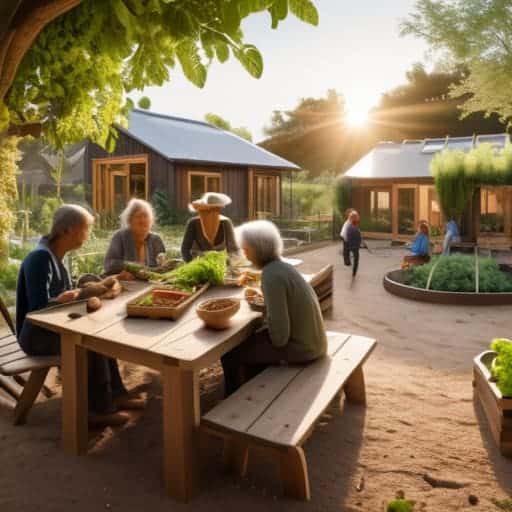
We’ve spent decades chasing a number on a spreadsheet, convinced that if the GDP isn’t climbing, we are somehow failing. But as we’ve explored, that obsession has come at a staggering cost to our planet and our collective mental health. By shifting our focus from the frantic pursuit of expansion toward a wellbeing-centered economy and embracing the core tenets of degrowth, we aren’t asking for less—we are asking for more of what actually matters. We are trading the hollow promise of endless accumulation for the tangible reality of stable ecosystems, shorter work weeks, and communities that actually look out for one another.
Transitioning to a post-growth world will be messy, and it will certainly require us to unlearn a lifetime of economic conditioning. But this isn’t about managing a decline; it is about designing a renaissance. It is about finally building a society that is measured by the depth of our connections and the health of our soil rather than the speed of our consumption. The goal isn’t to survive a shrinking economy, but to thrive in a steady one. It is time to stop building for the next quarter and start building for the next century.
Frequently Asked Questions
If we stop chasing GDP growth, how do we actually fund things like healthcare and infrastructure without the economy collapsing?
It’s the million-dollar question, right? If we aren’t printing more money through expansion, where does the cash come from? The answer lies in shifting our focus from how much we produce to how we distribute what we already have. We’re talking about taxing wealth and carbon rather than labor, reclaiming the massive productivity gains from automation, and restructuring public finance to prioritize long-term stability over short-term quarterly profits. It’s about circulation, not just accumulation.
Does a post-growth world mean we’re all just going to be poorer, or is this actually about redistributing what we already have?
It’s a common fear, but it’s actually the opposite. Post-growth isn’t about forced austerity or everyone living on crumbs; it’s about ending the “growth at all costs” race that benefits the few while leaving the rest of us exhausted. We aren’t shrinking the pie; we’re finally figuring out how to slice it fairly. It’s about trading mindless accumulation for better public services, shorter work weeks, and actual stability.
How do we transition to these models without causing massive unemployment in industries that currently rely on constant expansion?
This is the million-dollar question, and honestly, it’s where most people check out. We can’t just flip a switch and let people starve. The answer lies in a massive, state-led pivot toward “care work” and ecological restoration. We need to shift labor from producing useless plastic junk to repairing infrastructure, expanding public services, and localizing food systems. It’s about a job guarantee that prioritizes societal needs over profit margins.
